

When we take prescribed medications to heal from an illness, the last thing we expect is for our hearing to be negatively affected in the process. However, there is a surprisingly large group of ototoxic medications that can cause unintended damage to our delicate ears.
Hello, I am Dr. Shree Rao, an ENT specialist, Hearing restoration and Cochlear implant specialist. With a deep commitment to patient-centric care, my goal is to provide you with the medical knowledge you need to protect your hearing. Today, we are going to dive into a very important, yet often overlooked topic: ototoxic medications.
What is Ototoxicity?
The word ototoxicity combines “oto,” which means ear, and “toxicity,” which means poisoning. Simply put, ototoxic medications are drugs that can damage your inner ear, leading to adverse side effects like hearing loss, tinnitus (a ringing sensation in the ears), or severe balance disorders.
Currently, there are between 200 and 600 known ototoxic prescription and over-the-counter medications on the market. These medications can harm your hearing by damaging the sensory hair cells that line your inner ear. These tiny, incredibly fragile cells are responsible for converting sound vibrations into electrical signals that your brain can interpret. They also play a crucial role in helping you maintain your physical balance. When these delicate sensory cells are damaged by toxic drugs, they lose their functionality, which can permanently alter how you hear and navigate the world.
Common Symptoms to Watch Out For
The symptoms of ototoxicity can appear suddenly right after you take a medication, or they may develop slowly, sometimes becoming noticeable up to five years after beginning treatment. Usually, the very first warning sign is tinnitus, which you might experience as a slight ringing, buzzing, or roaring sound in your ears when there are no external noises present.
Over time, if the medication accumulates in your body, this can progress to noticeable hearing loss. Because your inner ear also controls your spatial orientation, balance problems are another major red flag. You might experience feeling unsteady on your feet, difficulty walking in the dark, severe headaches, a feeling of fullness in the ear, or even oscillopsia – the unsettling sensation that stationary objects are moving around you.
As an otologist who frequently works with children, I urge parents to be especially careful. In young children, hearing loss from ototoxicity can severely impact their verbal communication and learning skills. Signs to look out for in kids include extreme exhaustion after listening for long periods, struggling to stay focused in loud learning environments, or delayed speech development.
Which Medicines are Ototoxic?
Some of the most common ototoxic drugs include:
- Over-The-Counter Painkillers: Non-Steroidal Anti-Inflammatory Drugs (NSAIDs) such as ibuprofen, naproxen, and high doses of aspirin (salicylates) can cause temporary tinnitus and hearing loss. Fortunately, the toxic effects from these medications are typically dose-related and almost always reverse once the medication is completely discontinued.
- Antibiotics: Aminoglycoside antibiotics (like gentamicin, neomycin, and streptomycin) are powerful drugs used to treat severe bacterial infections. Damage from this class of antibiotics is often permanent. It is also worth noting that ear drops containing neomycin can be ototoxic if the eardrum is perforated.
- Diuretics: Loop diuretics, or “water pills” like furosemide, are prescribed for serious kidney disease and heart failure. They can cause hearing loss, especially when given intravenously in high doses.
- Chemotherapy Drugs: Cancer-fighting medications such as cisplatin and carboplatin are heavily associated with permanent hearing damage.
- Antimalarials: Quinine-based medications can have ototoxic effects that are very similar to high-dose aspirin.
What Should You Do?
If you notice ringing in your ears or a decline in your hearing while taking a new drug, do not panic, and do not abruptly stop taking your medication either. Many of these drugs are prescribed for life-threatening conditions where the medical benefits far outweigh the risks to your hearing. Instead, contact your prescribing physician immediately. In many cases, your doctor can adjust your dosage or switch you to a safer, non-ototoxic alternative to give your ears a chance to heal naturally.
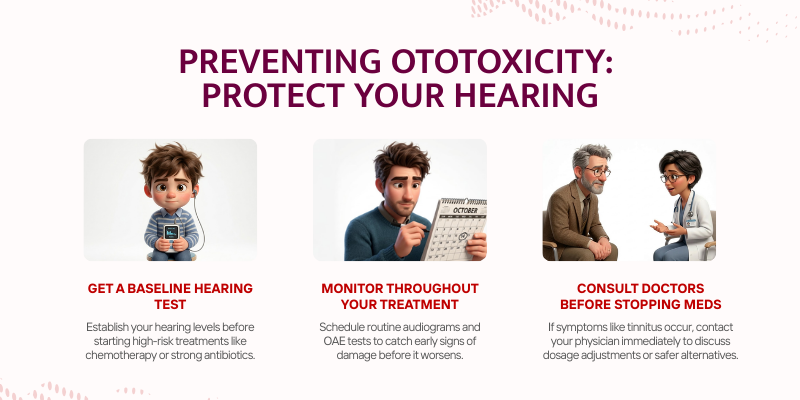
Preventing Ototoxicity
When treatment with a high-risk medication is absolutely necessary, the best defense is proactive monitoring. Before starting aggressive therapies like chemotherapy or strong intravenous antibiotics, I highly recommend getting a baseline hearing and balance test. By routinely monitoring your hearing throughout your treatment via audiograms and otoacoustic emissions (OAEs) tests, we can catch early signs of ototoxicity before the damage worsens.
Hearing is a precious sense, and protecting it requires staying informed about the medications we consume. If you have concerns about your ear health, or if you suspect you are experiencing medication-induced hearing loss, please do not hesitate to reach out.
Book an appointment with Dr. Shree Rao today at: https://earsurgeon.in/book-an-appointment/
Let’s work together toward a deaf-free India! For more jargon-free, educational content on hearing health and to stay updated on all things hearing, be sure to subscribe to my YouTube channel and follow the EarSurgeon on Instagram.
FAQs
What are ototoxic medications?
Ototoxic medications are drugs that can damage the inner ear, leading to hearing loss, tinnitus, or balance disorders.
Which medications are commonly ototoxic?
Common ototoxic medications include certain antibiotics, chemotherapy drugs, diuretics, and high doses of NSAIDs like ibuprofen.
Can hearing loss from ototoxic medications be reversed?
Some effects, like those from NSAIDs, are temporary, but damage from antibiotics or chemotherapy drugs may be permanent.
What are the early signs of ototoxicity?
Early symptoms include ringing in the ears (tinnitus), dizziness, balance problems, and gradual hearing loss.
How can I prevent hearing damage from ototoxic medications?
Regular hearing tests, monitoring symptoms, and consulting your doctor before changing medications can help prevent damage.
Should I stop taking a medication if I notice hearing problems?
No, never stop medication abruptly. Consult your doctor immediately to adjust dosage or explore safer alternatives.