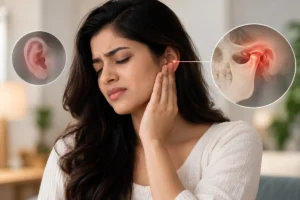
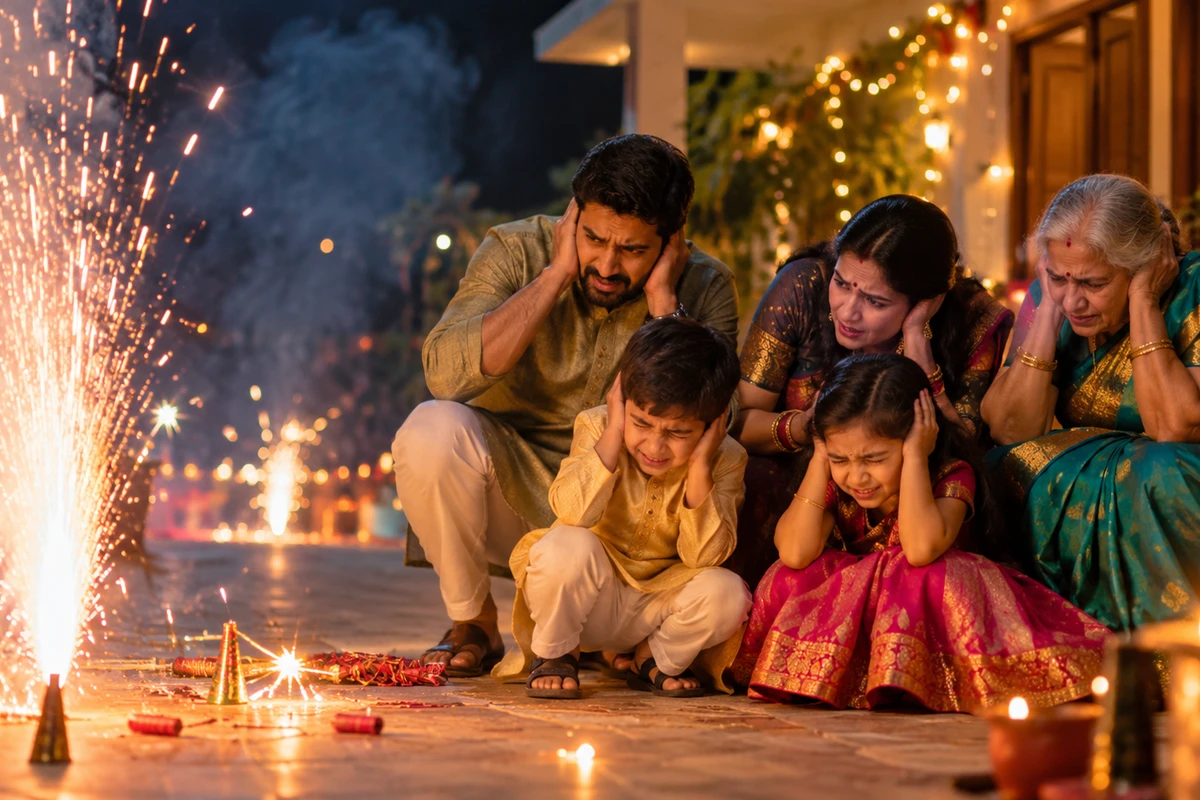
Diwali is a time for family, lights, and celebration. But a firecracker exploding close to the ear can turn a happy evening into a painful ear injury. I often remind families that hearing damage does not always require hours of loud noise. A single powerful blast can cause firecracker hearing damage, tinnitus, or even a ruptured eardrum.
The good news is that most noise-related hearing injuries can be prevented. A few simple precautions can make Diwali safer for children, older adults, and the whole family.
How impulse noise above 140 dB can injure the inner ear instantly
Firecrackers produce impulse noise. This means a very loud sound reaches the ear in a very short burst. Some fireworks can produce peak levels well above 140 decibels. At such levels, the sound can cause acoustic trauma, which means physical injury to the hearing system.
The inner ear contains tiny sensory cells inside the cochlea. These cells convert sound vibrations into signals that travel to the brain. Very loud impulse noise can damage these delicate cells. Unlike some other cells in the body, damaged human inner-ear sensory cells do not grow back.
This is why a person may notice muffled hearing or ringing immediately after a cracker bursts nearby. Sometimes hearing appears to return to normal within a day or two. That does not always mean the ear has escaped injury.
For more information about longer-term exposure and noise induced hearing loss, families can learn how repeated loud sounds affect hearing.
Safe distances, ear protection, and protecting children and elders
There is no single distance that can be called safe for every firecracker. The sound level depends on the type of cracker, where it explodes, and the surroundings. The safest approach is to stay as far away from the explosion as practical and avoid standing directly beside crackers.
Children need particular care because they may not understand how dangerous a loud blast can be. They should not hold powerful crackers close to their faces or ears. Younger children should watch fireworks from a distance with an adult nearby.
Older adults may also benefit from extra protection, particularly if they already have hearing difficulties or tinnitus.
Earplugs or properly fitting earmuffs can reduce exposure to loud sounds. However, protection should not become a reason to stand close to a firecracker. Distance remains important. If the sound is still uncomfortably loud, move farther away.
Families can also choose quieter celebrations, avoid lighting crackers in enclosed spaces, and keep infants away from areas where repeated blasts occur.
Blast injury: ruptured eardrums and sudden tinnitus after crackers
A powerful explosion close to the ear can injure more than the inner ear. The sudden pressure change can damage the eardrum, the thin membrane that vibrates when sound reaches the ear.
A ruptured eardrum may cause sudden ear pain, hearing loss, ringing in the ear, dizziness, or fluid or blood coming from the ear. Very loud impulse sounds can also damage the small bones behind the eardrum.
Sudden tinnitus after a cracker blast should not be ignored. Ringing or buzzing may settle, but it can sometimes persist. Sudden hearing loss in one or both ears is particularly important because early assessment can help determine the cause and guide treatment.
If you want to understand another practical way of assessing your exposure to loud sounds, you can check your risk with the shout test.
First aid and why immediate ENT review protects long-term hearing
If a firecracker explodes close to the ear, move away from the noise immediately. Do not put oil, ear drops, cotton buds, or other objects inside the ear. If there is bleeding or fluid from the ear, keep the ear dry and avoid trying to clean inside it.
Medical assessment is important if there is sudden hearing loss, persistent tinnitus, significant pain, dizziness, or bleeding. A doctor may examine the eardrum and arrange a hearing test to identify the extent of injury.
Sudden hearing loss should be treated as urgent. Delaying assessment can reduce the effectiveness of some treatments when they are appropriate.
Conclusion
Diwali celebrations do not need to come at the cost of your hearing. Keeping a generous distance from firecrackers, using suitable hearing protection, and protecting children can reduce the risk of firecracker hearing damage.
If hearing suddenly changes after a blast, do not wait for symptoms to disappear on their own. An ENT assessment can identify an eardrum or inner-ear injury early. If you need an evaluation after a loud-noise exposure, you can book an appointment with Dr. Shree Rao.
FAQs
Can firecracker hearing damage be temporary?
Yes. Some people experience temporary muffled hearing or ringing after loud noise. Hearing may improve within a day or two. However, temporary improvement does not always prove that the ear suffered no lasting injury. Persistent symptoms should be assessed by an ENT specialist.
My child has ringing in the ear after a cracker burst. Should I worry?
Ringing immediately after a very loud blast can indicate noise-related injury. Keep the child away from further loud noise and arrange an ENT assessment, especially if the ringing continues or there is hearing loss, pain, dizziness, or fluid or blood from the ear.
When should I see an ENT after a firecracker injury?
Sudden hearing loss, persistent tinnitus, severe ear pain, dizziness, or bleeding from the ear warrants prompt medical assessment. Families looking for specialist evaluation can consult the best ENT specialist in Hyderabad for appropriate examination and hearing tests.