
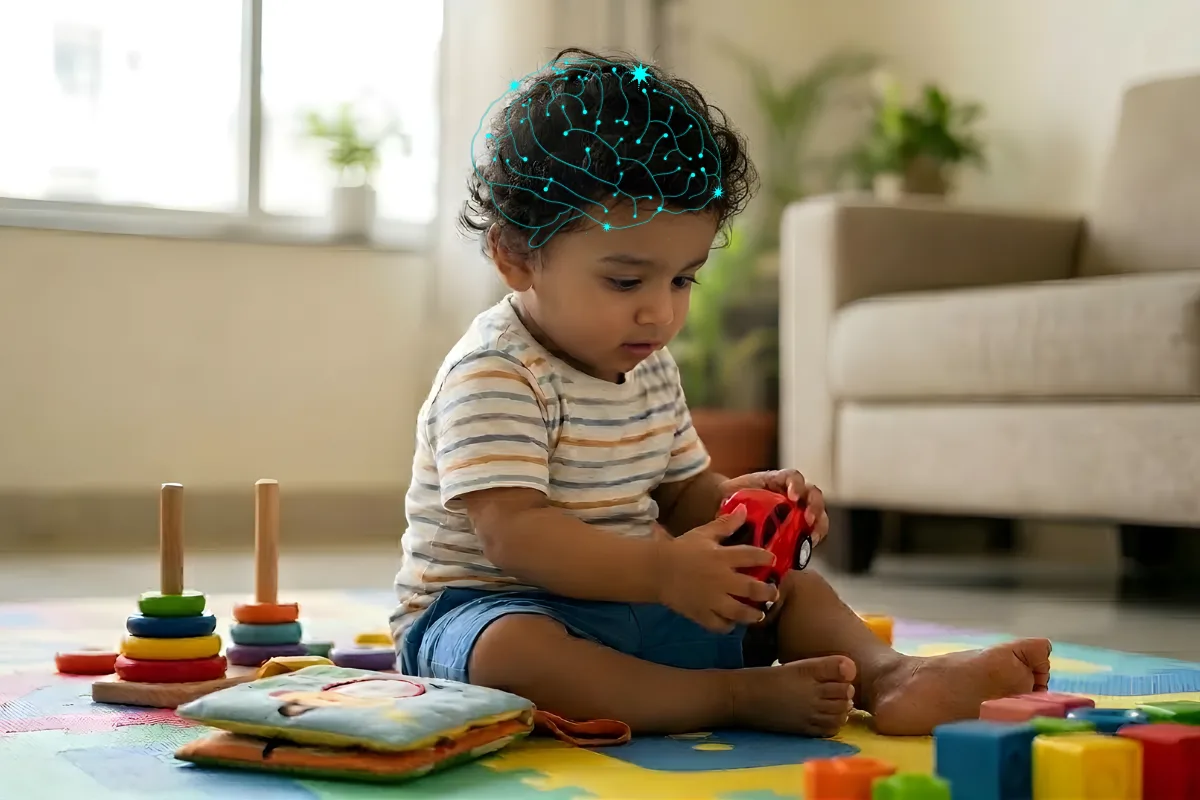
Your newborn baby hasn’t even cried their first cry, yet their brain is already learning language. It sounds impossible, but neuroscience now confirms it: the critical period hearing development window for hearing and language development doesn’t start at birth; it started 24 weeks before your baby was born. This is why early hearing loss intervention is so important.
This changes everything we thought we knew about hearing loss in children and why treatments like cochlear implant surgery for children can play a critical role when severe hearing loss is detected early.
The Brain's Hidden Classroom Begins in the Womb
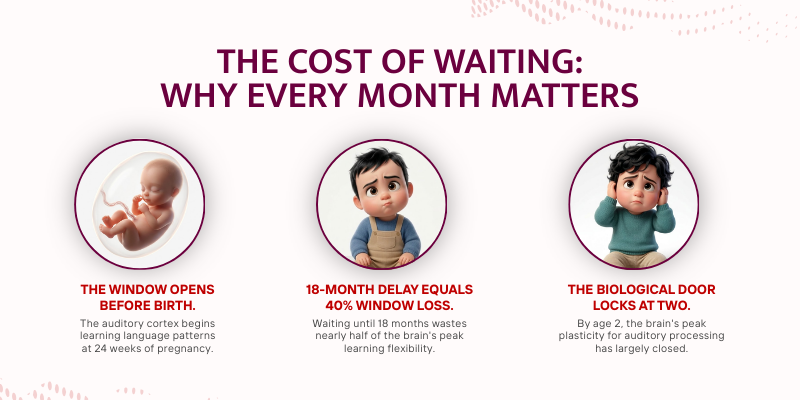
Recent research reveals that the fetal auditory cortex begins firing as early as week 24 of pregnancy. From that moment onwards, your baby is absorbing the rhythm, melody, and patterns of language from the world outside the womb. By birth, newborns have already memorized and begun reproducing the prosodic patterns of their native language.
This isn’t just fascinating neurobiology; it’s a biological deadline.
Here’s what happens next: after birth, a process called synaptic pruning begins. The brain rapidly strengthens connections it uses frequently and eliminates those it doesn’t. This sculpting of neural pathways happens fastest during the first three years of life. By age 3, the brain’s flexibility for auditory processing begins a steep decline. By age 5, the window of peak plasticity has largely closed.
This is why timing matters so urgently.
The Cost of Waiting
When we delay diagnosing and treating hearing loss, we’re not just postponing a solution; we’re asking the brain to work harder with less neurological flexibility.
Consider this: A child undiagnosed at 18 months has lost approximately 40% of their critical auditory learning window. The brain that could have naturally learned language during maximum neuroplasticity is now being asked to catch up with diminished biological resources.
The statistics are stark. Children who receive early hearing loss intervention before 6 months of age show:
Significantly better language development
Superior speech clarity and articulation
Higher educational achievement
Improved social integration
Children diagnosed after 2 years often struggle with persistent language delays, regardless of intervention quality.
It's Not a Hearing Problem; It's a Neurodevelopmental Emergency
This is the fundamental reframe we need in hearing healthcare. Untreated hearing loss isn’t a static disability; it’s an interruption of a biologically time-limited developmental process.
When a child can’t hear, the auditory cortex doesn’t simply sit idle. Research shows that the brain can repurpose the auditory regions for other sensory processing, particularly vision. This neuroplastic reorganization is actually the brain doing its job of maximizing available sensory input. But once this happens, reversing it becomes exponentially harder.
Early hearing loss intervention (whether through cochlear implant surgery for children with severe to profound loss, or through hearing aids and auditory therapy for others) isn’t just about restoring sound. It’s about restoring the brain’s access to critical developmental information during the only window when learning happens most naturally.
Dr. Shree Rao's Approach: Preserving Neuroplasticity
At Dr. Rao’s ENT Cochlear Implant Centre, we view cochlear implant surgery for children through this neurodevelopmental lens. The procedure isn’t about fixing a broken ear; it’s about opening a closed door before it locks permanently.
This is why we advocate relentlessly for:
Universal newborn hearing screening by 1 month
Diagnosis by 3 months for any child who doesn’t pass screening
Intervention by 6 months to preserve the peak neuroplastic window
With 99.9% surgical success rates and over 200 successful cochlear implant surgeries, our commitment is rooted in this principle: early is not just better; early is the only way to fully restore the brain’s natural capacity for language learning.
Your Child's Future Begins Now
If you’ve noticed signs of hearing loss (delayed speech, lack of response to sounds, difficulty following directions), the time to act is now. Every month matters. Every week counts.
Hearing loss is one of the most treatable conditions in pediatric healthcare. Early hearing loss intervention can transform your child’s trajectory.
Let’s preserve your child’s critical window. Because early intervention isn’t just recommended; it’s neurobiology.
Schedule a consultation with Dr. Shree Rao today. Book an Appointment
📞 Call us: +91 80018 56789
FAQs
What is early hearing loss intervention?
Early hearing loss intervention refers to diagnosing and treating hearing loss in infants as early as possible, usually before 6 months of age. It may include hearing aids, speech therapy, or cochlear implant surgery for children to support normal language development.
Why is early hearing loss intervention important for brain development?
During the critical period hearing development stage (birth to about 3 years), the brain rapidly forms neural connections for language and sound processing. Early hearing loss intervention ensures the brain receives auditory input during this crucial window.
What are the signs of hearing loss in infants and toddlers?
Common signs include lack of response to sounds, delayed speech, not turning toward voices, difficulty following instructions, and frequent ear infections. Early testing helps detect hearing loss quickly.
When is cochlear implant surgery recommended for children?
Cochlear implant surgery for children is usually recommended for severe to profound hearing loss when hearing aids do not provide enough benefit. Many children receive implants between 9–18 months for best outcomes.
How early can hearing loss be detected in newborns?
Most hospitals perform newborn hearing screening within the first month of life. If a baby fails the screening, a detailed hearing diagnosis should ideally be completed by 3 months of age.
Can children with cochlear implants develop normal speech?
Yes. When cochlear implant surgery for children is performed early and combined with auditory therapy, many children develop speech and language skills comparable to their hearing peers.