
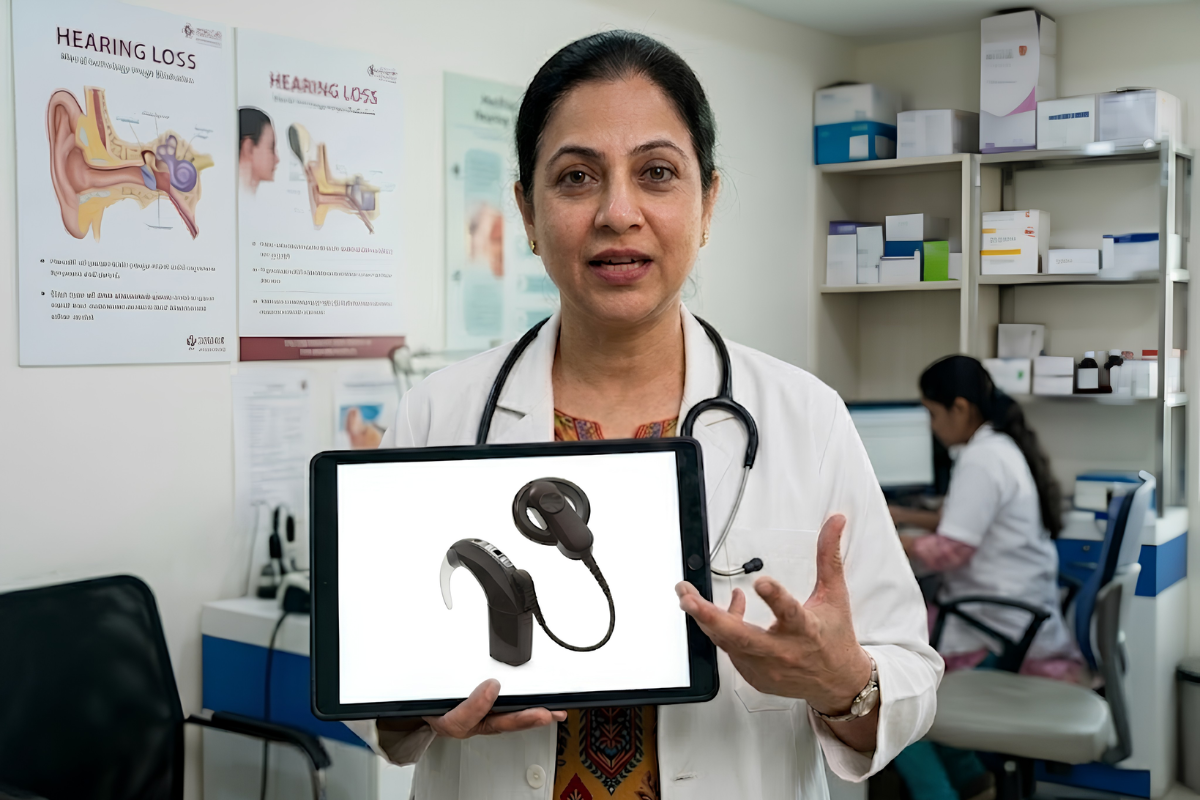
The cochlear implant activation represents a significant clinical milestone for patients and their families, marking the formal transition from surgical recovery to the beginning of auditory rehabilitation. This guide provides a formal overview of the procedural expectations, technical requirements and the complex auditory transitions associated with this critical phase of the patient’s journey toward sound. By understanding the intricate mapping process and the neurological adjustments involved, patients can better navigate the initial shift from silence or profound hearing loss to a new world of electrical stimulation and speech processing.
What is the "switch-on" of cochlear implants?
The “switch-on,” which we also affectionately refer to as activation day, first fitting or first mapping, is the exciting appointment where a patient’s cochlear implant is turned on and programmed with their external sound processor for the very first time.
During this appointment, our dedicated audiologists will connect your external speech processor to a computer to “tune” or “map” the implant specifically to your unique auditory needs. By gently stimulating the individual electrodes in the cochlea, we carefully measure specific hearing thresholds.
We determine your “T” (Threshold) levels, which represent the exact point at which you first become aware of a sound. We then establish your “C” (Comfortable) levels, ensuring the volume is comfortably loud for each electrode. Once these foundational levels are set, the processor’s microphone is activated, and typically, the first thing you will hear is the audiologist asking if you can hear them.
How long does it take to activate a cochlear implant?
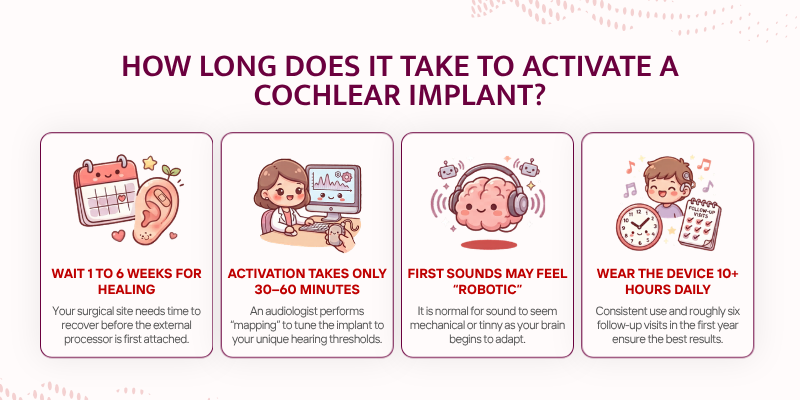
I frequently get asked about the timeline, which refers to both when the appointment happens after your surgery and how long you will spend in our care that day. Typically, we schedule the initial activation to take place anywhere from 1 to 6 weeks after your cochlear implant surgery, with many clinics specifically aiming for the 1 to 4 week mark.
This waiting period is absolutely essential as it allows your surgical site ample time to heal properly. For patients who are very frail, have complex ear conditions or required specific surgical procedures like a petrosectomy, a longer healing period may be necessary. However, depending on factors like wound healing, post-surgical swelling and the specific device used, emerging evidence shows that “early activation” (which can happen within just 1 to 7 days after surgery) is also safe and feasible for some patients.
When you come in for the initial activation appointment itself, you can generally expect it to take about 30 to 60 minutes. In some cases, we may split this process into two separate 30 to 60 minute appointments spread over a week or two, allowing us to fully orient you to the equipment and meticulously evaluate your hearing thresholds without rushing.
What to expect when a cochlear implant is turned on?
I always remind my patients to carefully manage their expectations. While heartwarming internet videos often show people instantly hearing perfectly, the reality is that you will not be able to hear everything clearly right away. Patients who have had previous hearing experience frequently describe these initial sounds as mechanical, tinny, robotic or resembling an off-tuned radio.
Reactions to these first sounds vary widely. Some individuals smile or look surprised, while others (especially young children) might cry or feel scared by the sudden influx of sound. Some might show very little reaction at first, which is completely normal and often depends on previous experiences with sound. Sounds may initially feel overwhelming or tiring simply because you are hearing things you have not heard in a very long time.
To make the day as comfortable as possible, you should bring a family member or loved one to share the experience. If you wear a hearing aid in your other ear, bring it with you so we can optimise your fitting. For children being activated, bringing drinks, snacks or a favourite cuddly toy can give them something familiar to hold onto during the appointment. Interestingly, when you go home, sounds might seem quieter or different compared to when you were in our office; this is actually a wonderful, positive sign that your brain is adapting.
Conclusion
The switch-on is truly just the beginning of your hearing journey. Following activation, your brain needs time, patience and practice to adapt to the new electrical signals. Over time, that mechanical sound quality typically fades, making speech sound much more natural, and you will begin to distinguish everyday environmental noises like footsteps, dogs barking or running water.
To get the most benefit, consistent wear of the device for 10 or more hours a day is highly encouraged. Because your brain is continually adapting and the electrode is settling, you will need frequent follow-ups, attending at least six appointments in your first year to regularly adjust and tune the computer settings.
At Dr. Rao’s ENT, our comprehensive approach means our audiologists and speech therapists will work closely with you through auditory training, conversation exercises and rebuilding your listening skills.
If you or your child are navigating hearing loss and want to explore cochlear implants our team at Dr. Rao’s ENT Cochlear Implant Center is here for you. Let’s begin your journey to a world of sound together. Book an appointment today at https://earsurgeon.in/book-an-appointment/.
FAQs
What is cochlear implant activation?
Cochlear implant activation is the first session where the device is turned on and programmed to help the patient begin hearing sounds.
When does cochlear implant activation happen after surgery?
Activation typically occurs 1 to 4 weeks after surgery, allowing time for proper healing before the device is switched on.
Is cochlear implant activation painful?
No, activation is not painful. It involves programming the device and testing sound levels, which may feel unusual but not uncomfortable.
What does sound feel like during cochlear implant activation?
Sounds may initially seem robotic, tinny, or unclear. This is normal and improves over time as the brain adapts.
How long does the activation appointment take?
The initial activation session usually takes 30 to 60 minutes, though follow-up mapping sessions are required for adjustments.
How many follow-up sessions are needed after activation?
Patients typically need at least 5 to 6 follow-up appointments in the first year to fine-tune the device and improve hearing outcomes.