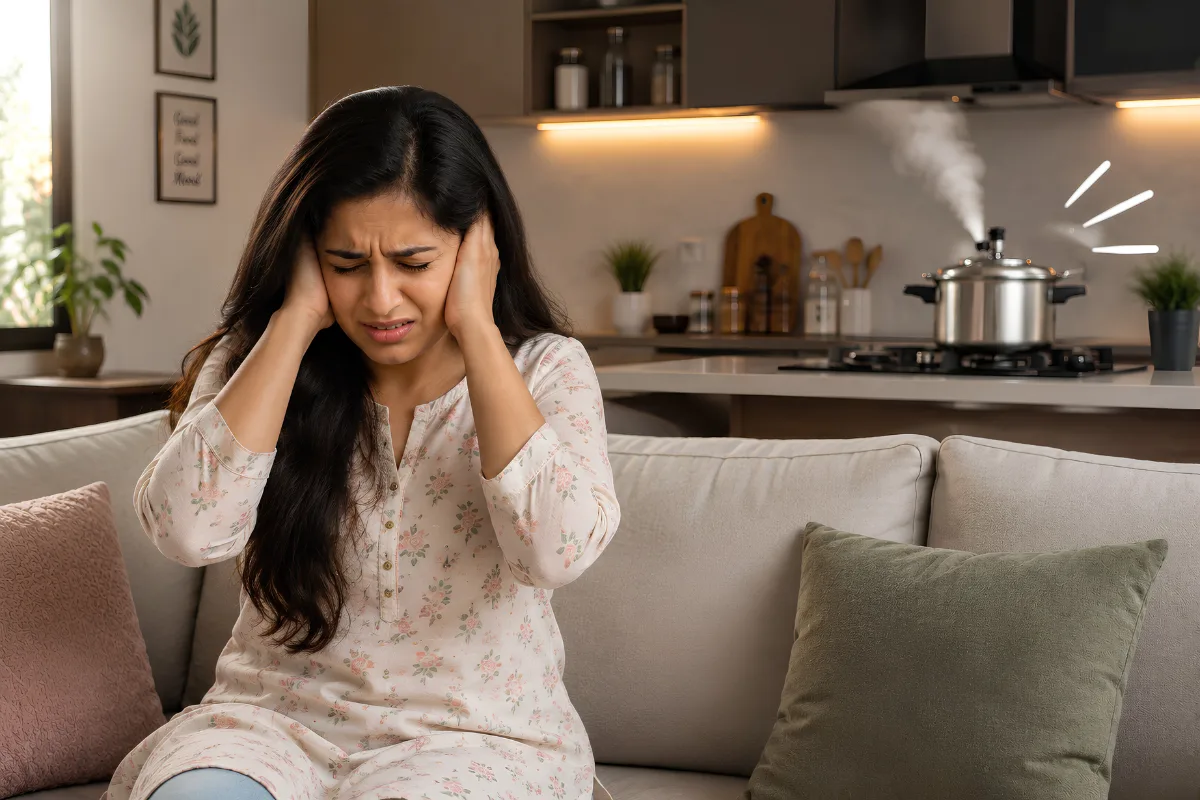
You may be able to hear perfectly well, yet find the sound of a pressure cooker, traffic, a child’s voice, or even running water surprisingly uncomfortable or painful. Patients sometimes describe feeling as though ordinary sounds have suddenly become “too loud.” This can be confusing, especially when a routine hearing test appears normal. As an ENT surgeon, I often find that understanding why this happens is the first step towards reducing the fear around sound. This condition is called hyperacusis, and appropriate hyperacusis treatment can help improve sound tolerance and daily life.
What is hyperacusis, and how is it different from misophonia?
Hyperacusis is a reduced tolerance to everyday sounds. Sounds that most people find comfortable may feel excessively loud, uncomfortable, or even physically painful. The problem is not necessarily that the ears are simply hearing better. Rather, the way sound is processed and tolerated can become altered.
This is different from ordinary annoyance. Everyone can become irritated by loud traffic, construction noise, or a noisy restaurant. With hyperacusis, the level of discomfort can be disproportionate to the actual sound level and can interfere with routine activities.
Misophonia is different again. In misophonia, particular sounds can trigger a strong emotional reaction such as anger, disgust, or distress, even when the sound itself is not especially loud. Common examples include chewing, breathing, or tapping sounds.
Understanding this distinction matters because the assessment and management approach can differ.
What causes hyperacusis?
There is no single cause of hyperacusis, and sometimes no clear cause can be identified. It may develop after exposure to a sudden or prolonged loud noise, including events such as fireworks, explosions, or occupational noise. Head injury, migraine and certain neurological conditions have also been associated with sound sensitivity.
Hyperacusis can also occur alongside tinnitus, the perception of sound such as ringing or buzzing when there is no external source. The two conditions frequently overlap, although having tinnitus does not automatically mean a person will develop hyperacusis.
Occasionally, increased sound sensitivity can appear after ear surgery. Published reports describe hyperacusis following procedures such as tympanoplasty and mastoid surgery, although these postoperative cases are uncommon and the underlying mechanism may differ between patients.
When sound sensitivity appears suddenly, particularly after significant noise exposure, head injury, migraine symptoms, or an ear procedure, an ENT and audiological assessment can help determine whether there is an underlying ear or neurological problem.
If you also experience ringing or buzzing, it is useful to understand when to worry about tinnitus and when an evaluation is appropriate.
Why overprotecting the ears can make hyperacusis worse
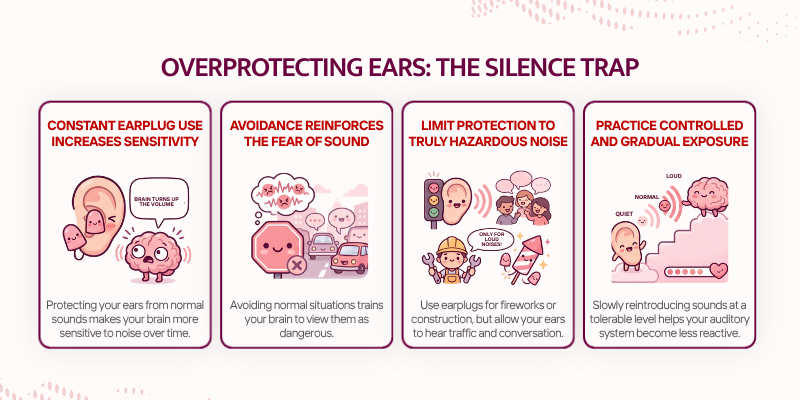
When ordinary sounds become uncomfortable, the natural response is to avoid them. Some people begin wearing earplugs or earmuffs throughout the day, keeping away from restaurants, traffic, conversations, children’s activities, or other everyday environments.
Short-term hearing protection is important when a person is genuinely exposed to hazardous noise. The problem is using it continuously for ordinary sounds.
Prolonged avoidance can reinforce the feeling that everyday sounds are threatening or intolerable and may contribute to increasing sound sensitivity. Current clinical guidance therefore generally recommends avoiding unnecessary sound avoidance while still protecting the ears from genuinely loud environments.
This does not mean someone with hyperacusis should simply “put up with” painful sounds. The goal is controlled, gradual exposure at a level that remains tolerable.
For people concerned about whether their past noise exposure may have affected their hearing, the shout test for noise induced hearing loss explains why needing to raise your voice in a noisy environment can be an important warning sign.
Hyperacusis treatment: sound therapy, counselling and gradual desensitisation
Hyperacusis treatment is usually individualised because the underlying cause, severity, hearing status, tinnitus symptoms, migraine history and emotional response to sound can vary considerably.
Sound therapy is one approach used to gradually improve tolerance. It may involve carefully introduced background sounds or sound generators at a comfortable level. The intention is not to overwhelm the ear, but to help the auditory system become less reactive to ordinary sounds over time. Recent reviews suggest that sound-based interventions can improve symptoms, although researchers also note that stronger clinical trials are still needed.
Counselling is another important part of management. Understanding that discomfort does not necessarily mean that everyday sounds are damaging the ear can reduce fear and avoidance. Cognitive behavioural approaches may also help people manage the anxiety, distress and behavioural responses associated with hyperacusis. Evidence for CBT specifically in hyperacusis is promising but remains more limited than the evidence for tinnitus.
Gradual desensitisation should be planned rather than improvised. A sound that is painful should not simply be forced upon the patient. If sound therapy causes significant discomfort or pain, the level and approach need to be reassessed.
The first step is therefore not necessarily finding a device or treatment immediately. It is understanding why the sound sensitivity has developed and whether conditions such as tinnitus, migraine, hearing loss or another ear problem are contributing.
Conclusion
Hyperacusis can make an ordinary day feel unexpectedly difficult, but sound sensitivity does not mean that a person has to permanently withdraw from normal life. Identifying possible triggers, avoiding genuinely damaging noise, reducing unnecessary sound avoidance, and using appropriately supervised sound therapy and counselling can help improve tolerance.
The right hyperacusis treatment depends on the individual, which is why an ENT and hearing assessment is often the best starting point. If everyday sounds have become painful or unusually loud, book an appointment to discuss the symptoms and determine the next appropriate step.
FAQs
Can hyperacusis occur even if my hearing test is normal?
Yes. A conventional hearing test measures hearing thresholds, but hyperacusis concerns how comfortably sounds are tolerated. A person can therefore have relatively normal hearing sensitivity while experiencing significant discomfort from everyday sounds.
Should I wear earplugs if normal sounds hurt my ears?
Ear protection is appropriate in genuinely noisy environments, but wearing earplugs continuously for ordinary sounds is generally discouraged because excessive avoidance may increase sound sensitivity. A clinician can help determine when protection is appropriate.
When should I see an ENT for hyperacusis?
If everyday sounds have become consistently uncomfortable, painful, or disruptive to work, sleep or social activities, an ENT evaluation is appropriate. A specialist such as the best ENT doctor in Hyderabad can help assess hearing, tinnitus, migraine-related symptoms and other possible causes before recommending treatment.