
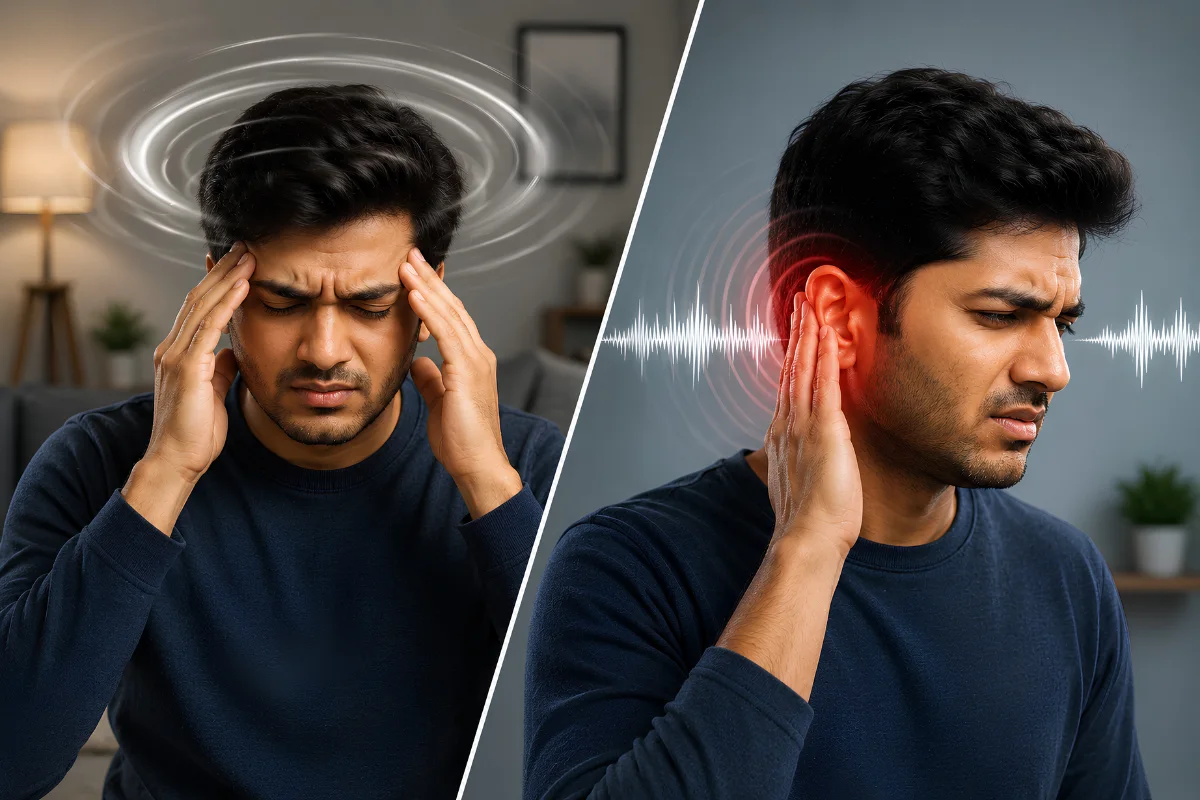
When a patient walks into my clinic describing sudden spinning sensations that last for hours, along with a ringing sound in one ear and a sensation of fullness, I think of Meniere’s disease. I’ve found that many people experience these episodes for months or even years before understanding what’s happening. Meniere’s disease is a chronic inner ear condition that causes unpredictable attacks, and fortunately, menieres disease treatment has evolved significantly to help patients regain control of their lives. In this guide, I’ll walk you through what Meniere’s disease really is, how it differs from other vertigo conditions, and the range of treatment options available.
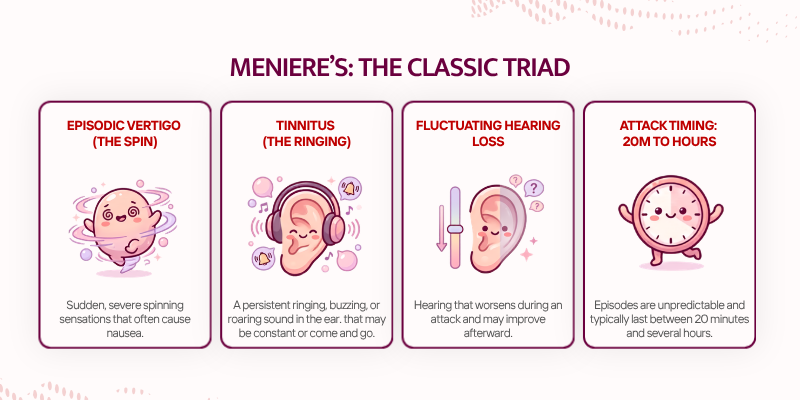
The Classic Triad: Episodic Vertigo, Tinnitus, and Fluctuating Hearing Loss
Meniere’s disease is characterized by three hallmark symptoms that often appear together during an attack: sudden vertigo (a spinning sensation that can be severe enough to cause nausea and vomiting), tinnitus (a ringing, buzzing, or roaring sound in the ear), and fluctuating hearing loss (where your hearing gets worse during an episode and may improve afterward). This combination is what doctors call the classic triad of Meniere’s disease.
The attacks are unpredictable, sometimes occurring weekly and other times with months between episodes. Each attack typically lasts between 20 minutes and several hours. Between episodes, some patients feel completely normal, while others experience low-level symptoms like a persistent hum in the ear or slight imbalance. The inner ear plays a crucial role in both hearing and balance, so when fluid buildup (endolymph) occurs inside the inner ear, it disrupts the delicate sensors responsible for both functions.
How Meniere's Differs from BPPV and Labyrinthitis
Patients sometimes confuse Meniere’s disease with other inner ear conditions, most commonly BPPV or viral labyrinthitis. Understanding the differences helps you explain your symptoms to a healthcare provider more clearly. BPPV (Benign Paroxysmal Positional Vertigo) causes brief spinning episodes triggered by specific head movements, typically lasting less than a minute, and it does not involve hearing loss or tinnitus. Labyrinthitis is usually caused by a viral infection and comes with a single episode of severe vertigo followed by gradual improvement over weeks; it also does not have the recurring pattern that defines Meniere’s disease.
Meniere’s disease, by contrast, returns repeatedly over months or years, consistently involves the triad of symptoms, and does not necessarily require a head movement to trigger an attack. Learning about BPPV explained can help you distinguish between these conditions if your symptoms feel similar. The distinction matters because each condition requires a different approach to management.
Menieres Disease Treatment: Salt Restriction, Lifestyle Changes, and Medications
For many patients, the first line of Meniere’s disease treatment focuses on diet and lifestyle modifications. A low-salt diet is often recommended because salt retention can increase fluid buildup in the inner ear; most patients are advised to stay below 1500 to 2000 milligrams of sodium per day. In the Indian context, this can be challenging given the salt content in processed foods, condiments like achaar and soy sauce, and street food, so working with a nutritionist familiar with Indian cuisine helps.
Diuretic medications such as hydrochlorothiazide are commonly prescribed to reduce fluid accumulation. Other medications target specific symptoms: antihistamines can reduce vertigo severity, while antiemetics help control nausea during attacks. Avoiding alcohol, caffeine, and nicotine is also recommended, as these can worsen symptoms in some patients. Stress management and adequate sleep support overall inner ear health.
Advanced Options: Intratympanic Injections and When Surgery Is Considered
When conservative measures fail to control attacks, advanced menieres disease treatment options become relevant. Intratympanic injections involve placing medication (usually corticosteroids or gentamicin) directly into the middle ear through a needle, which then diffuses into the inner ear. This approach targets the problem more directly and can be repeated if needed. Gentamicin injections are particularly effective at reducing vertigo but carry a small risk of hearing loss with repeated use.
Surgical options are reserved for cases where quality of life remains severely affected despite other treatments. Endolymphatic sac decompression and labyrinthectomy are procedures that alter the inner ear’s fluid dynamics or eliminate the balance function of an affected ear, allowing the brain to compensate. Surgery is not a first-line choice, but for the right patient, it can provide lasting relief from disabling vertigo attacks.
Moving Forward
Living with Meniere’s disease requires patience and a collaborative approach between patient and provider. What works for one person may not work for another, so tracking your attacks, dietary changes, and medication responses helps refine your treatment plan. If you’re experiencing the symptoms described here, menieres disease treatment begins with an accurate diagnosis and a personalized strategy tailored to your lifestyle and symptom severity. If you’d like to discuss your symptoms with an experienced ENT specialist, feel free to book an appointment to explore which treatment path might work best for you.
For patients whose hearing loss has progressed significantly, cochlear implant technology continues to advance. Understanding cochlear implant candidacy can be valuable if you face long-term hearing changes.
FAQs
Is Meniere's disease permanent, or will it go away on its own?
Meniere’s disease is a chronic condition, which means it tends to persist over time. However, the pattern varies greatly among patients. Some experience fewer attacks as years pass, while others may have active episodes throughout their lives. The hearing loss associated with Meniere’s can sometimes stabilize or improve with effective treatment, but any permanent hearing damage from early attacks may not return.
Can diet alone manage Meniere's disease symptoms?
Diet is a foundation, but it’s rarely sufficient on its own for patients with moderate to severe symptoms. A low-salt diet combined with adequate hydration and stress management helps some patients reduce attack frequency, but most benefit from medication or other interventions alongside dietary changes. Think of diet as one piece of a larger treatment strategy rather than a complete solution.
When should I consult a specialist about my symptoms?
If you’re experiencing recurring episodes of vertigo paired with hearing changes or tinnitus, seeking care from a best ENT specialist in Hyderabad ensures you receive proper testing and diagnosis. Early intervention, especially with audiological assessment, helps prevent complications and guides you toward the most effective treatment plan for your specific situation.