
Introduction
I see many patients who come to me frustrated because their ears feel stuck, muffled, or like they need constant popping to feel normal. The sensation is often described as fullness, pressure, or that uncomfortable feeling of not being able to clear your ears no matter what you try. What they’re experiencing is eustachian tube dysfunction, a surprisingly common condition that affects people of all ages. The eustachian tube is a small but critical passage that connects your middle ear to the back of your nose, and when it gets blocked or fails to open properly, it creates that irritating sensation. The good news is that eustachian tube dysfunction treatment ranges from simple home remedies to targeted medical interventions, and understanding what’s happening inside your ear is the first step to getting relief.
What the Eustachian Tube Does and Why It Stops Opening Properly
The eustachian tube is only about the width of a pencil lead, yet its job is enormous. This tube is responsible for three critical functions: equalizing air pressure between your middle ear and the outside environment, draining fluid that naturally collects in the middle ear, and protecting the middle ear from bacteria and viruses that travel up from the nose and throat. When the eustachian tube opens and closes properly, you barely notice it. But when it becomes blocked or stops functioning as it should, that’s when problems begin.
The tube stays mostly closed, opening only when you swallow, yawn, or chew. Tiny muscles around it control these movements. When inflammation from a cold, allergy, or sinus infection swells the tissues inside the tube, those muscles can’t work properly. Fluid begins to pool behind the eardrum because there’s no way for it to drain. In some cases, the tube becomes sticky or loses its natural ability to contract and relax. This is why eustachian tube dysfunction can persist long after the initial infection has cleared, leaving patients confused and uncomfortable.
Common Triggers: Colds, Allergies, Sinus Infections, Flights, and Monsoon Weather
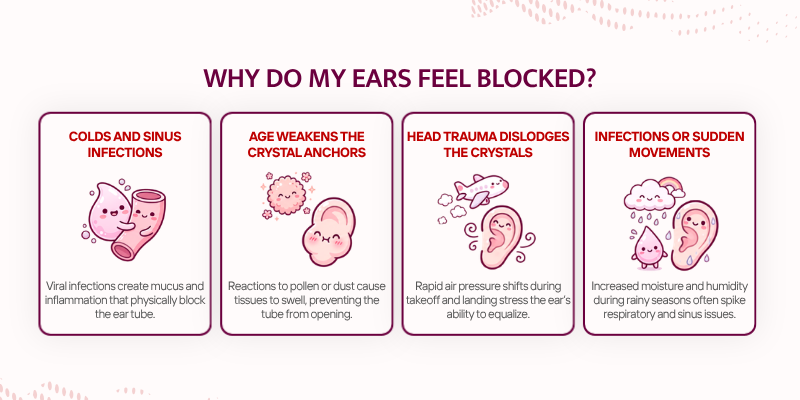
Understanding what sets off eustachian tube dysfunction helps you prevent it whenever possible. Viral colds and upper respiratory infections are the most common culprits, as they create inflammation and mucus buildup in the nasal passages and eustachian tube. Allergies do something similar—when your body reacts to pollen, dust, or animal dander, it produces inflammation and congestion that blocks the tube’s opening.
Sinus infections, too, frequently cause dysfunction. When the sinuses become infected or inflamed, swelling extends to nearby tissues, including the eustachian tube. People with chronic sinusitis often report ongoing ear problems because the inflammation never fully resolves.
In India, monsoon season brings a particular challenge. The sudden shifts in humidity, increased moisture in the air, and the spike in water-related illnesses during the rainy season all contribute to a surge in upper respiratory and sinus infections during these months. If you live in areas like Hyderabad and surrounding regions, you may notice eustachian tube dysfunction symptoms worsen during or shortly after monsoon.
Flying is another well-known trigger. During takeoff and landing, cabin pressure changes rapidly. Your eustachian tube must open frequently to equalize pressure inside your middle ear with the cabin pressure outside. If the tube is even slightly congested from a recent illness or allergy, it can’t keep up with these pressure changes, causing discomfort and sometimes pain.
High altitude environments pose similar challenges. Even climbing stairs in a tall building or driving over mountains can trigger symptoms if your tube is already compromised. Rapid pressure changes expose the weakness quickly.
Home Relief: Swallowing, Valsalva, Steam, Nasal Sprays, and What to Avoid
Many cases of eustachian tube dysfunction improve on their own with supportive care. The goal is to reduce inflammation, encourage the tube to open, and help fluid drain naturally.
Swallowing and the Valsalva maneuver are the first tools to try. Swallowing activates the muscles around the eustachian tube and often coaxes it open. Chewing gum serves the same purpose by encouraging repeated swallowing. The Valsalva maneuver involves gently pinching your nose closed, keeping your mouth shut, and then applying slight pressure to your nose as if you’re trying to breathe out. This maneuver increases air pressure in the eustachian tube and can help pop ears. Do this gently, however. Forceful Valsalva can damage the delicate structures inside your ear.
Steam inhalation reduces inflammation and loosens congestion. Breathing in steam from a hot shower, a bowl of hot water, or a humidifier helps thin mucus and reduces swelling in the nasal passages and eustachian tube. Add a few drops of eucalyptus or peppermint oil to enhance the effect, though plain steam works perfectly well.
Decongestant nasal sprays and saline rinses can ease congestion from a cold or allergy. Saline nasal spray or a neti pot rinses out mucus and irritants without the side effects of medicated sprays. If you use medicated decongestant sprays, limit them to three days to avoid rebound congestion, where symptoms worsen after stopping.
Sleeping with your head elevated helps drainage. When you lie flat, fluid pools more easily in the middle ear. Propping yourself up at a 30-degree angle with extra pillows encourages gravity to help drain the sinuses and eustachian tube while you sleep.
What to avoid: Do not insert cotton swabs into your ear canal, as this can worsen irritation and push wax deeper. Avoid blowing your nose hard or pinching both nostrils closed while blowing, as this can force bacteria and fluid into the eustachian tube and middle ear, potentially worsening the problem.
When Persistent Blockage Points to Glue Ear, Retraction, or the Need for Grommets
Most cases of eustachian tube dysfunction resolve within two to three weeks with home care. If symptoms persist beyond three weeks, or if you experience pain, fever, hearing loss, or fluid draining from the ear, it’s time to see an ENT specialist. Prolonged dysfunction can lead to secondary problems that require medical intervention.
One condition that often develops from untreated eustachian tube dysfunction is glue ear, also called otitis media with effusion. This is when fluid becomes thickened and sticky, persisting in the middle ear long after the initial illness has passed. Unlike acute ear infection, glue ear may not cause pain, but it causes muffled hearing and can interfere with speech and language development in children. Understanding the distinction between glue ear and acute ear infection helps you recognize when symptoms need immediate versus scheduled evaluation.
Chronic eustachian tube dysfunction can also cause the eardrum to retract inward. The eardrum normally sits flat and vibrates freely; retraction pulls it inward and restricts its movement. Over time, retraction can damage the small bones of the middle ear and lead to permanent hearing loss if left untreated.
For persistent cases, particularly in children or when hearing is affected, an ENT specialist may recommend grommets (also called tympanostomy tubes). These tiny tubes are placed through the eardrum during a brief procedure and allow air to reach the middle ear directly, bypassing the eustachian tube. Grommets typically stay in place for six to eighteen months and often fall out on their own as the eardrum heals. They provide relief and allow the eustachian tube to recover function naturally.
Conclusion
Eustachian tube dysfunction is uncomfortable, but it is not typically dangerous if addressed promptly. Most episodes resolve with simple home remedies: swallowing, gentle pressure techniques, steam, and time. However, when blockage persists beyond a few weeks or affects your hearing, eustachian tube dysfunction treatment from an ENT specialist becomes important. Persistent fluid or retraction can create opportunities for infection, hearing loss, or complications that are harder to treat later. If your symptoms continue despite home care, or if you notice hearing changes, schedule a consultation to have your ears evaluated properly. Early intervention often prevents the need for more invasive procedures down the line.
FAQs
How long should I wait before seeing a doctor if my ears won't pop?
Most cases of eustachian tube dysfunction from a cold or allergy improve within one to three weeks with home care. However, if symptoms persist beyond three weeks, you experience ear pain, fever, hearing loss, or discharge from the ear, see an ENT specialist sooner. Children with persistent symptoms should be evaluated within two weeks, as prolonged fluid exposure can affect speech and language development.
Can eustachian tube dysfunction cause permanent hearing loss?
Temporary eustachian tube dysfunction typically does not cause permanent hearing loss. However, when blockage persists over months or years, or when it leads to glue ear or eardrum retraction, hearing loss can develop. This is especially concerning in children, whose hearing during early years is critical for language development. Prompt evaluation and treatment prevent most long-term damage. For information on recognizing the difference between simple blockage and more serious ear conditions, learn more about glue ear vs ear infection and how each is managed differently.
I have recurring eustachian tube dysfunction every time I fly or go to high altitudes. Is there a permanent fix?
Yes. If you have recurrent pressure-related symptoms, several strategies help. Chew gum or suck on lozenges during pressure changes, use nasal decongestant spray 30 minutes before flying, or apply a warm compress to your ears before pressure change occurs. Some patients benefit from nasal corticosteroid sprays used for a few days before flying. If dysfunction is severe and frequent, a best ENT specialist in Hyderabad or other cities can evaluate your tube’s function more thoroughly and recommend tailored solutions. For patients who have undergone cochlear implantation, managing eustachian tube health becomes even more important; your implant team can advise on ear infections in children with cochlear implants and how to protect your device during upper respiratory illness.
Ready to address your ear concerns? If symptoms persist or affect your hearing, schedule an appointment to discuss eustachian tube dysfunction treatment options tailored to your situation. Visit https://earsurgeon.in/book-an-appointment/ to book your consultation with Dr. Shree Rao.