

Introduction
As an ENT specialist, I see BPPV (Benign Paroxysmal Positional Vertigo) more often than any other vestibular condition in my clinic. Patients arrive frightened by sudden spinning sensations, convinced something serious has happened to their inner ear. What they discover is that BPPV is treatable, manageable, and rarely dangerous. Understanding BPPV transforms fear into knowledge, helping you recognize what’s happening in your ear and take the right steps toward recovery.
If you’ve experienced sudden vertigo triggered by rolling over in bed or tilting your head back, you may have BPPV. This guide explains what BPPV is, why it happens, how to manage it at home, and when professional care makes the difference.
What is BPPV (Benign Paroxysmal Positional Vertigo)?
BPPV stands for Benign Paroxysmal Positional Vertigo. The name describes the condition precisely: benign (not dangerous), paroxysmal (sudden episodes), positional (triggered by head position), and vertigo (spinning sensation).
Inside your inner ear are tiny calcium carbonate crystals called otoliths. These crystals help your brain detect head movement and maintain balance. In BPPV, these crystals become dislodged and move freely inside the semicircular canals, structures that sense rotational movement. When your head position changes, the crystals shift, sending false signals to your brain about movement that isn’t actually happening. Your brain interprets these signals as spinning, even though your body is perfectly still.
This is a mechanical problem, not an infection or structural damage. The inner ear itself is healthy. Only the position of tiny crystals needs correction.
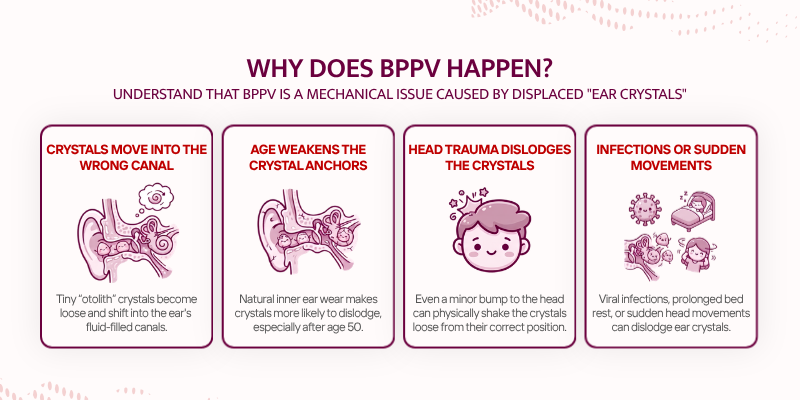
Why Does BPPV Happen?
BPPV develops for several reasons. Age-related wear on inner ear structures is the most common cause, which is why BPPV appears frequently in adults over 50. However, BPPV also affects younger adults and children following specific triggers.
Head trauma, even a minor bump weeks earlier, can dislodge the crystals. Sudden head movements during sleep or vigorous head motion can have the same effect. Viral infections that affect the inner ear may compromise the structures holding the crystals in place. Prolonged bed rest or immobility weakens the anchoring mechanisms. Osteoporosis, which affects bone density throughout the body, can weaken the delicate structures in the inner ear.
In children, BPPV often follows ear infections or head injuries. Many patients, however, experience BPPV without any clear trigger. This is completely normal and doesn’t indicate a more serious problem.
Recognizing BPPV Symptoms
BPPV has distinctive symptoms that help differentiate it from other inner ear conditions. The most obvious sign is sudden vertigo triggered by specific head movements. Rolling over in bed, bending down, or tilting your head backward may provoke an episode.
Episodes are brief, typically lasting seconds to a few minutes. Unlike sustained dizziness from other conditions, BPPV creates intense but short bursts of spinning. You might experience nausea or vomiting during episodes, and afterward, mild imbalance or difficulty walking may persist for several minutes.
The symptoms may repeat throughout the day or occur sporadically. Over time, and especially with proper management, episodes typically decrease in frequency and intensity.
BPPV vs. Labyrinthitis: Understanding the Difference
Patients often confuse BPPV with labyrinthitis because both affect the inner ear and cause vertigo. However, these conditions are fundamentally different.
BPPV is a mechanical problem triggered by specific head positions. Labyrinthitis is inflammation of the inner ear, usually caused by viral infection. BPPV episodes last seconds to minutes; labyrinthitis causes constant dizziness that persists for days or weeks. BPPV doesn’t affect hearing, while labyrinthitis frequently includes hearing loss or tinnitus. Labyrinthitis typically follows a viral illness and may include fever or general illness symptoms. BPPV appears suddenly without preceding infection.
Understanding this distinction matters because treatment approaches differ significantly. BPPV responds to repositioning exercises; labyrinthitis requires anti-inflammatory and supportive care.
How BPPV is Treated: The Epley Maneuver
The Epley maneuver is a repositioning exercise performed by ENT specialists or trained audiologists. During the procedure, your specialist guides your head through a series of controlled movements designed to reposition the displaced crystals back into their correct location.
The maneuver is quick, painless, and highly effective. Most patients experience relief after one or two sessions. You may feel brief vertigo during or immediately after the procedure as the crystals move, but this passes quickly.
The key point: the Epley maneuver requires professional diagnosis and guidance. Attempting it based on online videos risks performing it incorrectly, which can worsen symptoms. Your ENT specialist will confirm BPPV first, then perform the maneuver with proper technique.
Managing BPPV at Home
While professional treatment is effective, home management helps you stay safe and comfortable during episodes.
When an episode occurs, sit or lie down immediately to prevent falls. Move slowly and deliberately. Avoid sudden head movements until the spinning completely stops. Keep your head still for a few minutes after the sensation passes.
For ongoing management, sleep with your head elevated on two pillows. Avoid rapid position changes, especially when getting out of bed in the morning. Turn your entire body rather than just your head when looking to the side. Maintain good hydration and a balanced diet. Gentle neck stretches may help, but avoid aggressive movements.
Seek medical care if episodes are frequent, worsening, or accompanied by hearing loss or neurological symptoms. Schedule an appointment with your ENT specialist if home management hasn’t provided relief after two to three weeks.
From My Practice
In my experience as an ENT specialist, BPPV is remarkably common yet frequently misunderstood. The intense fear patients experience often exceeds the actual severity of the condition. Early recognition and appropriate management resolve BPPV within weeks for most patients. This isn’t permanent damage to your ear. This is treatable and manageable.
If you’re experiencing sudden dizziness or suspect BPPV, professional assessment provides clarity and relief. At Dr. Shree Rao’s ENT Cochlear Implant Centre, we help patients regain confidence and stability. Schedule a consultation to discuss your symptoms and explore the right management approach for you.
Book an appointment: earsurgeon.in/book-an-appointment/
FAQs
What is Benign Paroxysmal Positional Vertigo (BPPV)?
Benign Paroxysmal Positional Vertigo (BPPV) is a common inner ear condition that causes brief episodes of spinning dizziness triggered by changes in head position. It occurs when tiny calcium crystals become displaced within the inner ear.
What causes Benign Paroxysmal Positional Vertigo?
BPPV may develop due to aging, head injuries, viral inner ear infections, prolonged bed rest, osteoporosis, or sometimes without any identifiable cause.
How is Benign Paroxysmal Positional Vertigo diagnosed?
An ENT specialist diagnoses BPPV through your medical history, symptom assessment, and positional tests such as the Dix-Hallpike maneuver, which helps identify the affected semicircular canal.
What is the best treatment for Benign Paroxysmal Positional Vertigo?
The most effective treatment is the Epley maneuver or other canal repositioning procedures performed by a trained ENT specialist. These maneuvers move the displaced crystals back to their correct position.
Can Benign Paroxysmal Positional Vertigo go away on its own?
Yes. Many cases improve within a few weeks as the displaced crystals settle naturally. However, treatment with repositioning maneuvers often provides much faster relief and reduces recurring episodes.
When should I see a doctor for Benign Paroxysmal Positional Vertigo?
You should consult an ENT specialist if your dizziness is frequent, severe, lasts longer than a few minutes, is associated with hearing loss, ringing in the ears, weakness, double vision, or if symptoms continue despite home care.