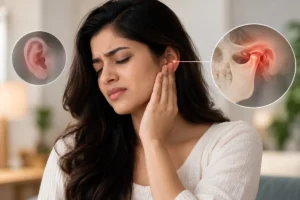
If you have ever experienced a persistent “muffled” feeling in your ears – almost as if you are listening to the world underwater – you may be dealing with fluid behind eardrum. While this condition is extremely common in children, it also affects adults, particularly after a lingering cold, sinus infection, or allergy flare-up.
I’m Dr. Shree Rao, and as a ENT specialist in hearing restoration, I often see patients use the terms “glue ear” and “ear infection” interchangeably. However, they are very different conditions with different causes, symptoms, and treatment pathways. Understanding these differences is essential for choosing the right management strategy and protecting long-term hearing.
What Does “Fluid Behind Eardrum” Mean?
The middle ear is an air-filled space located just behind the eardrum (tympanic membrane). Under normal circumstances, this space remains dry and well-ventilated, allowing the eardrum to vibrate freely when sound waves enter the ear.
When fluid accumulates in this space, it interferes with those vibrations. This leads to reduced sound transmission and symptoms such as hearing loss, ear fullness, popping sensations, or internal crackling noises. Many patients ask, how long does fluid behind the eardrum last? In most cases, it clears within a few weeks to a few months, depending on the underlying cause.
What Is Glue Ear (OME)?
Glue ear – medically known as Otitis Media with Effusion (OME) – occurs when thick, sticky fluid builds up in the middle ear without signs of active infection.
The most common cause is dysfunction of the Eustachian tube, which normally equalizes pressure between the middle ear and the throat. When this tube becomes blocked due to colds, allergies, enlarged adenoids, or smoke exposure, fluid begins to collect.
At this stage, the fluid behind the eardrum is present, but there is no bacterial or viral infection.
Glue Ear Symptoms in Children and Adults
In children, glue ear often goes unnoticed because it is usually painless. Common signs include:
- Delayed speech or unclear pronunciation
- Turning up the TV volume
- Poor attention at school
- Balance issues or clumsiness
In adults, symptoms may include:
- Persistent muffled or dull hearing
- A blocked or “full” sensation in one or both ears
- Ringing or buzzing sounds (tinnitus)
- Mental fatigue from straining to hear
Many patients worry about long-term effects and ask whether glue ear hearing loss is reversible. The reassuring answer is yes – once the fluid clears, hearing usually returns to normal.
What Is an Ear Infection (AOM)?
An ear infection, also known as Acute Otitis Media (AOM), is caused by bacteria or viruses entering the middle ear. This leads to inflammation and a buildup of infected fluid or pus.
Unlike glue ear, ear infections are typically painful and may be accompanied by fever, irritability, or general unwellness. The pressure from infected fluid pressing against the eardrum is what causes the intense discomfort.
Difference Between Glue Ear and Ear Infection
Feature | Glue Ear (OME) | Ear Infection (AOM) |
Primary Symptom | Muffled hearing, blocked sensation | Severe ear pain |
Fever | Rare | Common |
Pain Level | Mild or none | Sharp, intense pain |
Fluid Type | Thick, sticky, sterile | Infected fluid or pus |
Onset | Gradual | Sudden |
Understanding the difference between glue ear and ear infection helps avoid unnecessary antibiotics and ensures the correct treatment is used.
Glue Ear Treatment Options
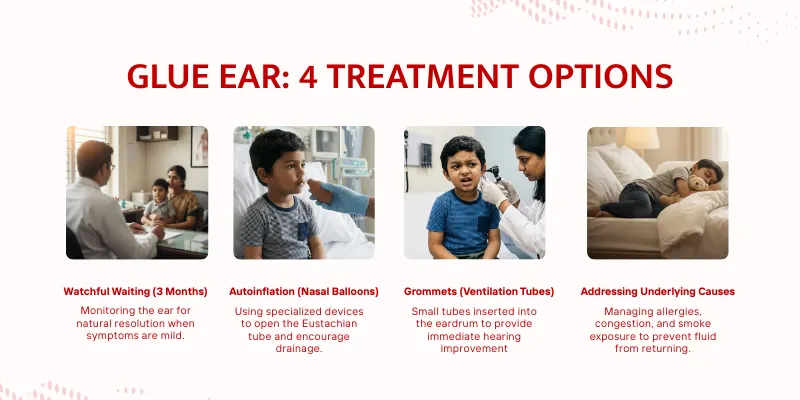
The majority of glue ear cases resolve naturally once the Eustachian tube starts functioning again. Common treatment approaches include:
- Watchful Waiting
Doctors often monitor the condition for up to three months, especially if hearing loss is mild and there are no developmental concerns. - Autoinflation
Devices such as nasal balloons can help open the Eustachian tube and encourage fluid drainage. This method works well for older children and adults. - Grommets (Ear Tubes)
For persistent or recurrent glue ear, small ventilation tubes may be inserted into the eardrum. This provides immediate hearing improvement and prevents further fluid buildup. - Addressing Underlying Causes
Managing allergies, treating nasal congestion, removing enlarged adenoids, or eliminating smoke exposure can significantly reduce recurrence.
When to See an ENT Specialist
If symptoms last longer than two to three weeks, or if hearing loss begins to affect daily life, professional evaluation is recommended. Adults with persistent fluid in one ear should be assessed promptly to rule out other causes. For children, early intervention is crucial to avoid speech, learning, or behavioral difficulties.
Get a permanent solution to glue ears with EarSurgeon, Dr Shree Rao – the trusted ENT specialist and Best Glue Ear Specialist in Hyderabad, India.
FAQs
Is glue ear the same as water in my ear after swimming?
No. Swimming water remains in the outer ear canal. Glue ear involves fluid trapped behind the eardrum, which external water cannot reach unless the eardrum is perforated.
Is glue ear contagious?
No. Glue ear itself is not contagious, although the colds or infections that lead to Eustachian tube blockage can be.
Can glue ear cause dizziness or balance problems?
Yes. Because the middle ear contributes to balance, fluid buildup can occasionally cause unsteadiness or mild vertigo.
Can flying with glue ear damage my ear?
While unlikely to rupture the eardrum, flying can be very painful due to pressure changes. Decongestants or nasal sprays before travel are often advised.