
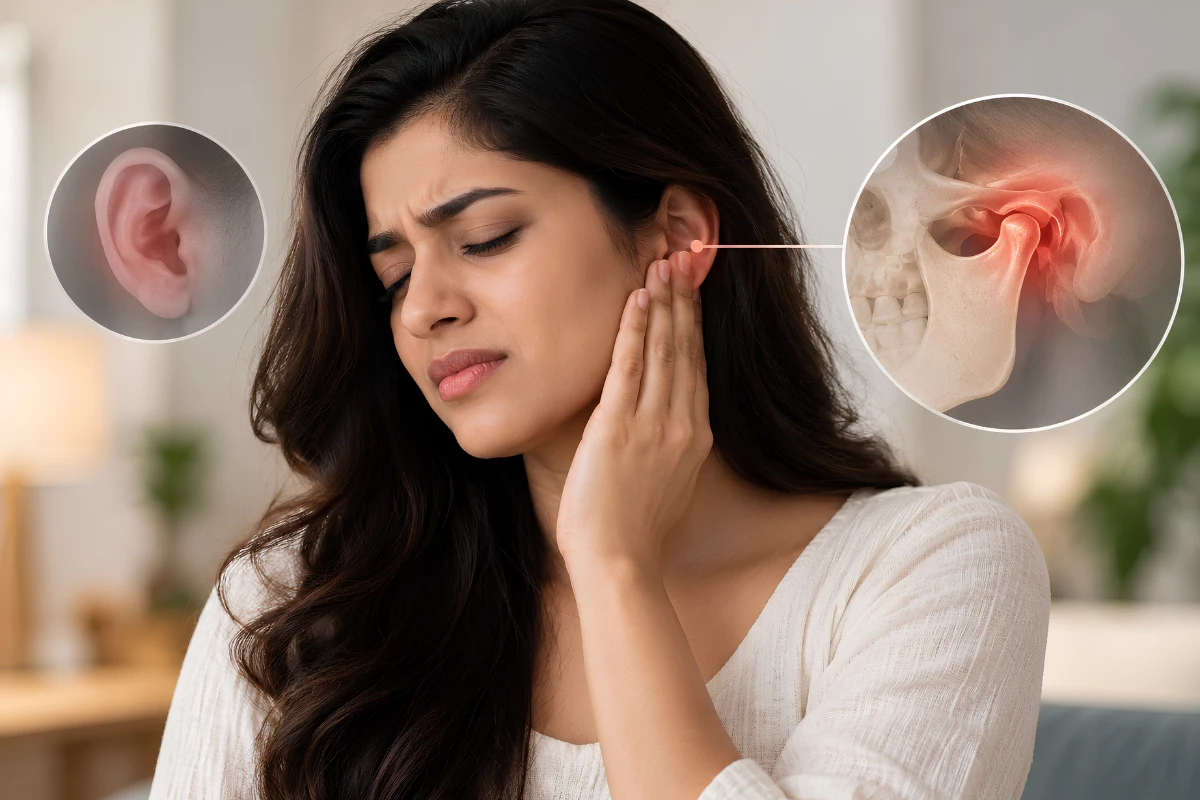
Ear pain can be frustrating, especially when your ear looks normal. If discomfort gets worse when you chew, yawn, or wake with a stiff jaw, the source may be the temporomandibular joint, or TMJ. I often remind patients that pain felt in the ear does not always begin in the ear. TMJ ear pain can be felt around the ear because the jaw joint sits immediately in front of the ear.
Why the jaw joint sits so close to the ear canal
The temporomandibular joint connects the lower jaw to the skull. Each joint sits in front of the ear canal and moves when you speak, chew, swallow, or yawn.
Because of its location, irritation in the jaw joint or surrounding muscles can be felt as ear pain. This is called referred pain, where the painful area is not necessarily where the problem began. A normal-looking ear does not rule it out.
For another example, read about referred pain from tooth to ear.
Clues that TMJ ear pain may be the real culprit
What happens when the jaw moves can be a useful clue. TMJ-related pain may become more noticeable while chewing, biting, yawning, or opening the mouth. Some people also notice clicking, popping, grinding, stiffness, reduced movement, or locking.
Morning symptoms can be revealing. Jaw soreness or stiffness after waking may suggest overnight clenching or grinding. Pain may also spread to the temple, face, or neck.
A normal ear examination makes TMJ more worth considering, but it does not prove that TMJ is the cause. Ear infections, dental problems, throat conditions, and other causes still need to be considered. Persistent ear pain needs an examination rather than repeated treatment for an unconfirmed infection.
Habits that can worsen TMJ pain
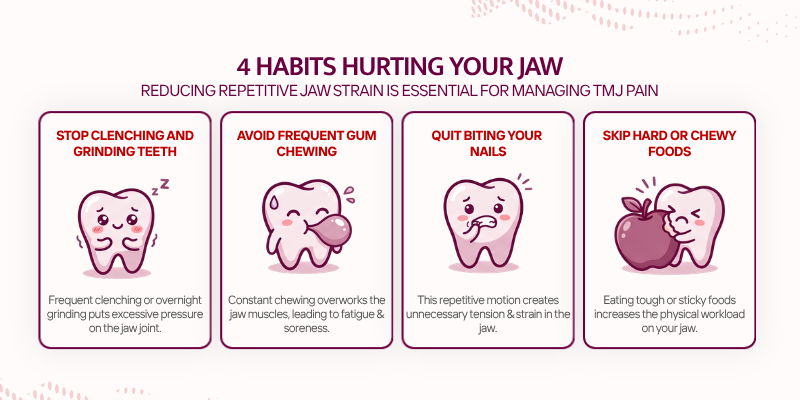
The jaw is used constantly, so repetitive strain can keep symptoms going. Clenching the teeth, grinding during sleep, chewing gum frequently, biting nails, or eating very hard or chewy foods can increase the workload on the jaw muscles and joint.
Stress can increase muscle tension and make pain more noticeable. Posture may also contribute when prolonged desk or screen use creates tension around the neck and jaw. These are not necessarily the sole cause. TMJ disorders can have several contributing factors.
Treatment: jaw rest, physiotherapy, splints, and when to see an ENT
Treatment usually starts conservatively. Temporary jaw rest, softer foods, avoiding gum and excessive clenching, and appropriate heat or cold may help settle symptoms. Gentle exercises and physiotherapy can be useful when stiffness, muscle tension, or neck problems contribute.
A splint or bite guard may be considered when clenching or grinding is involved. It should be assessed and fitted appropriately.
An ENT assessment is appropriate when ear pain persists, keeps returning, or does not fit the usual pattern of an ear infection. An ENT examination can establish whether the ear is actually the source and whether another condition needs attention. If the ear appears normal and symptoms point toward the jaw, assessment by a dentist or clinician experienced in TMJ disorders may also be appropriate. You can also read about these red flags when choosing a clinic.
Conclusion
Not every earache is an ear infection. When the ear looks normal but pain changes with chewing, jaw movement, clenching, or waking, tmj ear pain is one possibility worth considering. The right diagnosis matters because treating the ear will not resolve pain that originates in the jaw. If ear pain is persistent or unexplained, an ENT evaluation can be a sensible next step. For an appointment, visit EarSurgeon.
FAQs
Can TMJ pain feel like an ear infection?
Yes. TMJ pain can feel like a deep earache, but it often has a connection with chewing, clenching, jaw movement, or stiffness. Examination is needed to distinguish it from an actual ear problem.
Does jaw clicking always mean I have TMJ disorder?
No. Clicking or popping without pain or movement problems is common and does not necessarily require treatment. Painful clicking, locking, stiffness, or difficulty opening the mouth is more relevant when assessing TMJ disorder.
When should I see a specialist for persistent ear pain?
If ear pain is persistent, recurrent, unexplained, or accompanied by hearing changes, discharge, dizziness, or other concerning symptoms, an ENT assessment is appropriate. When choosing a specialist, patients may look for an experienced best ENT specialist in Hyderabad who can assess both ear-related and referred causes of pain, including TMJ problems.