
When a child is born, we celebrate their first cry, their first smile, and their first steps. But there is a vital milestone that often goes unnoticed because it is silent: their ability to hear. Hearing is the primary gateway to communication, emotional bonding, and cognitive growth. Congenital hearing loss—hearing impairment present at birth—is what I call a “silent epidemic.” Because a baby cannot tell you they can’t hear, many parents only realize there is an issue when speech is delayed, often around the second or third birthday. By then, we may have already missed the most critical window for development: the “Golden Period.”
The Golden Period of Development
The first three years of life are the most formative for a child’s brain. During this time, the brain is incredibly “plastic,” meaning it is rapidly forming the neural pathways required to understand and produce language. If the auditory cortex—the part of the brain responsible for processing sound—does not receive stimulation during these early years, those pathways may never fully develop, or the brain may even “repurpose” that space for other senses. This makes learning to speak much more difficult later in life. My mission for a “Deaf-free India” begins with identifying these children as early as possible—ideally screening every newborn within the first few weeks of life to ensure they never miss a single note of their childhood.
How do we test a baby?
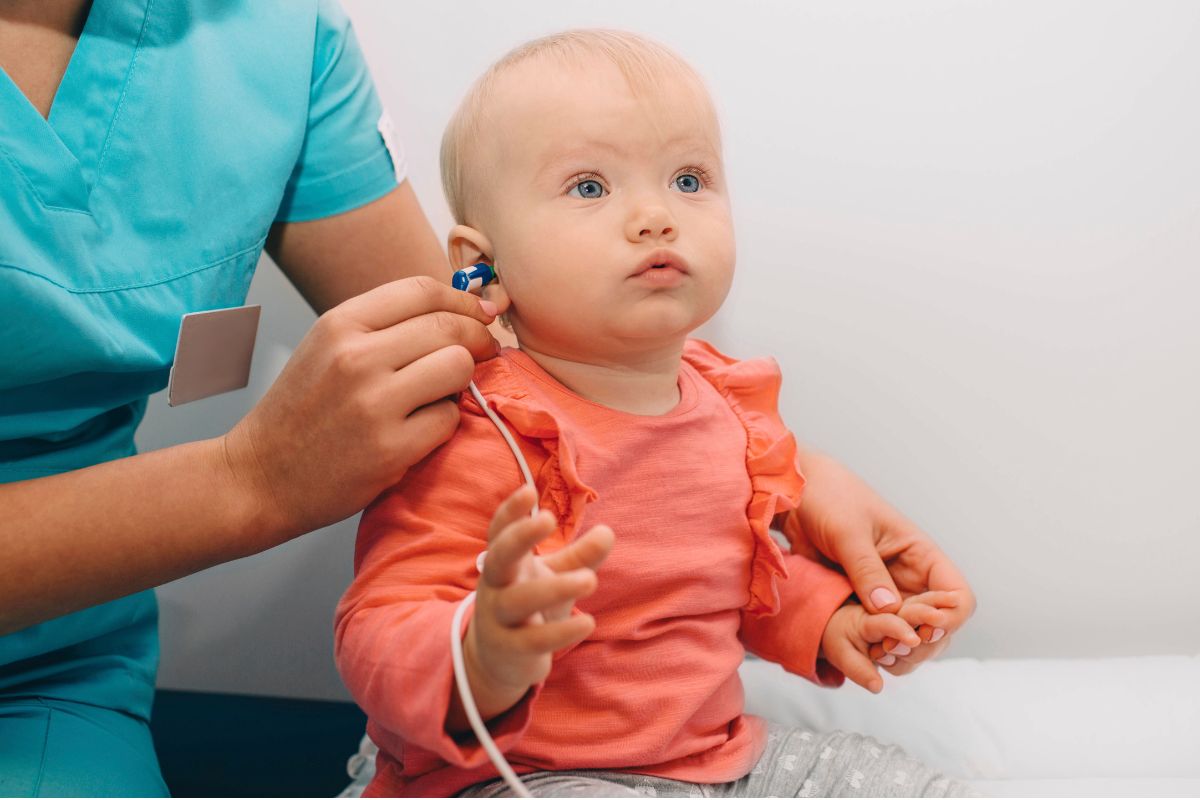
I often meet parents who are anxious that hearing tests might be painful or stressful for their newborns. I want to reassure you: these tests are completely non-invasive, painless, and highly accurate. They are designed to be so gentle that they are typically performed while the baby is in a natural, deep sleep. We primarily use two specialized screening methods:
- OAE (Otoacoustic Emissions): We place a tiny, soft earplug in the baby’s ear canal. This device plays quiet clicking sounds and measures the “echo” produced by the inner ear. A healthy ear reflects sound back; if no echo is detected, it tells us we need to look closer.
- BERA (Brainstem Evoked Response Audiometry): Often referred to as “automated BERA,” this test acts like a tiny EEG for hearing. Small, painless sensors are placed on the baby’s forehead and behind the ears to measure exactly how the hearing nerve and brain respond to sounds.
By identifying hearing loss early—ideally before six months of age—we can intervene with hearing aids or cochlear implants. This early start allows your child to develop language at the same rate as their hearing peers, ensuring they can attend regular schools and lead a life without limitations. Having performed thousands of surgeries, including record-breaking days on the Lifeline Express, I have seen firsthand that silence is no longer an inevitability; it is a choice we no longer have to make.
Don’t wait for your child to miss a milestone. Book a screening today.