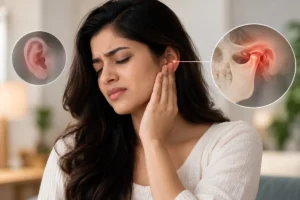
It is perfectly natural to feel a sense of unease or even alarm when you experience a sudden ear injury or a ruptured eardrum. Whether it occurs during a heated sports match, a sudden loud blast, or an accidental slip with a cotton swab, the physical and emotional impact of ear trauma can be overwhelming. You may worry about permanent hearing loss or wonder if your ear will ever feel “normal” again.
Please know that you are not alone in these feelings; my medical team and I understand that there is a clear path forward. Physically, a ruptured eardrum is defined as a tear in the thin membrane separating the external ear canal from the middle ear cavity. Knowing what to do immediately after eardrum rupture to manage those first critical hours can replace that anxiety with a sense of control over your recovery.
Common Causes of Traumatic Rupture
In a specialized surgical practice, we frequently treat perforations caused by sudden physical or pressure-related trauma:
- Direct Impact: Many patients ask, “Can slapping the ear cause eardrum rupture?” The answer is yes; a forceful slap across the ear with a cupped hand, a punch, or a blow sustained during contact sports can create a “pressure pop” that tears the delicate membrane.
- Acoustic Trauma: Exposure to sudden, explosive noises – such as gunfire, fireworks, or blasts – can cause immediate rupture due to intense sound waves. In extreme cases – such as sounds exceeding 184 dB – the eardrum can rupture instantly.
- Barotrauma: This occurs when there is a drastic difference between the air or water pressure outside the ear and the pressure inside. It is most common during scuba diving descents or rapid altitude changes during air travel.
- Foreign Object Injury: Accidental punctures are frequently self-inflicted by inserting objects like cotton swabs (Q-tips), bobby pins, or pencils into the ear canal to clean wax or relieve itching.
Recognizing the Symptoms
Symptoms of a ruptured eardrum after trauma are typically instantaneous. Patients often report:
- Sudden Ear Pain: Often described as a sharp, intense pain that may subside quickly after the eardrum ruptures, especially if the tear relieves pressure from a pre-existing infection.
- Aural Drainage: Fluid leaking from the ear that may be clear, bloody, or look like pus.
- Auditory Changes: You may notice partial or complete hearing loss after eardrum trauma, or detect a “whistling” sound heard specifically when blowing the nose.
- Sensory Disturbance: Persistent ringing or buzzing in the ear, along with a brief feeling of being off-balance or nauseated.
Immediate “Dos and Don’ts” for Patient Safety
If you suspect your eardrum has ruptured, your primary goal is to protect the middle ear while it begins the healing process.
- DO Keep the Ear Bone-Dry: Avoid swimming or getting water in the ear while bathing. Use a waterproof silicone earplug or a cotton ball coated in petroleum jelly during showers to prevent bacteria from entering the middle ear.
- DO Manage Pain Safely: Over-the-counter relievers like paracetamol or ibuprofen are effective. A warm, dry compress applied to the outer ear can also soothe discomfort.
- DON’T Use OTC Eardrops: Never put over-the-counter drops in a ruptured ear unless specifically prescribed by a physician, as the fluid can travel deep into the ear and cause further damage.
- DON’T Blow Your Nose Forcefully: Forceful nose blowing creates high pressure in the ears that can be painful and significantly slow the healing of the eardrum.
Professional Diagnosis and Surgical Options
Understanding when to see a doctor for an eardrum rupture is key to a smooth recovery. While many small perforations heal on their own within one to three months, a professional evaluation is essential to assess the level of hearing loss and the size of the hole. If a perforation does not close spontaneously within several weeks, surgical intervention may be necessary. Options include:
- Myringoplasty: A minor procedure where a specialist places a medicated paper or gel patch over the tear to encourage the tissue to grow back together.
- Tympanoplasty: A surgical repair where a surgeon grafts a small piece of the patient’s own tissue to close a larger hole.
If you notice any of the symptoms explained above, get an appointment with me for a comprehensive evaluation.
When to Contact Me Immediately
- Neurological Concerns: Sudden, severe vertigo or a spinning sensation.
- Infection Signs: A high fever (above 102°F) or a general feeling of being unwell.
- Unmanaged Pain: Severe or worsening ear pain that does not respond to medication.
- Active Bleeding: Fresh, persistent bleeding from the ear canal.
- Facial Weakness: Any new weakness or drooping in your facial muscles.
FAQs
Can I rupture my eardrum just by sneezing?
Yes, but rarely. Holding in a sneeze creates high pressure in the respiratory system that passes through the Eustachian tube, which can lead to a tear in one or both eardrums.
Can I fly with a ruptured eardrum?
Generally, yes, but you should consult your doctor first—especially if you have recently had surgery to repair the ear.
How can I prevent future ruptures?
Avoid inserting any objects (like cotton swabs or bobby pins) into the ear canal, treat ear infections promptly, and wear ear protection in loud environments.