
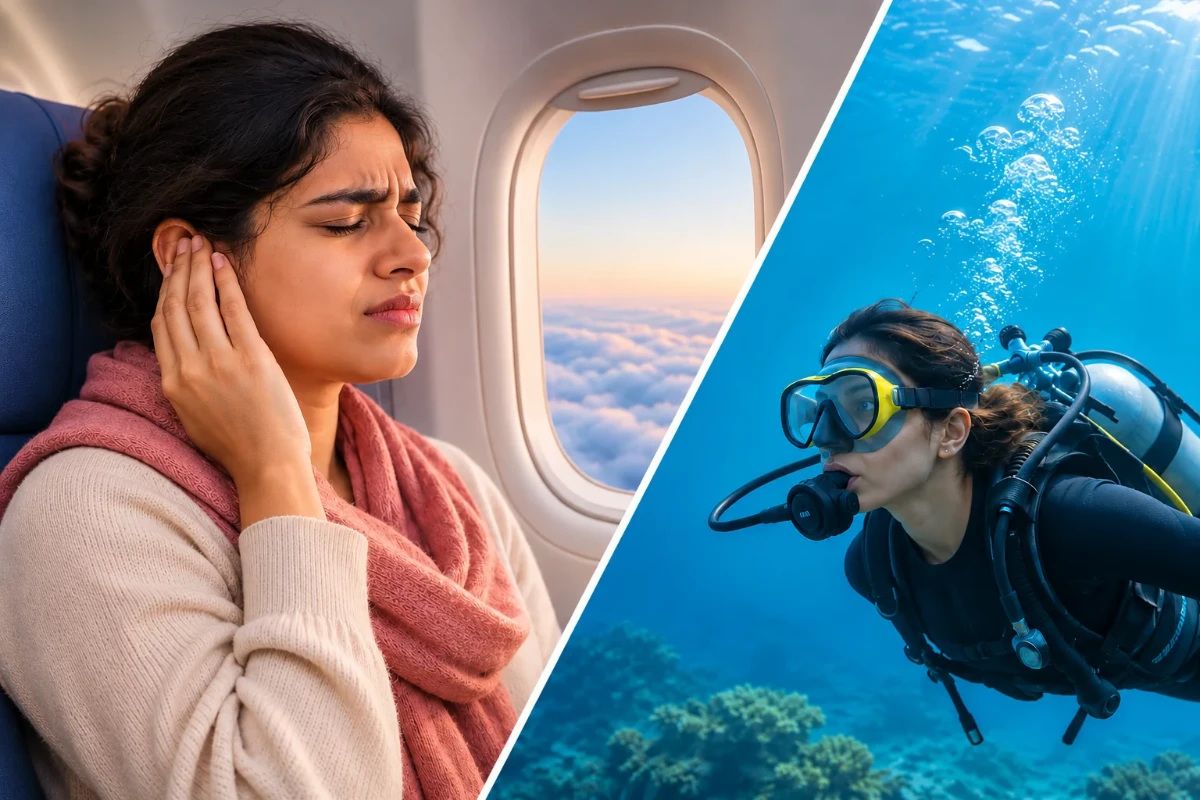
Many patients tell me the same story. The plane starts to descend into Hyderabad, and a sharp pain stabs one ear. Hearing turns muffled, and the ear stays blocked for hours. In my practice, I see this after flights, scuba dives in Goa, and drives down ghat roads. Most cases settle alone, but some need ear barotrauma treatment from an ENT specialist.
What Ear Barotrauma Is and How Pressure Injures the Ear
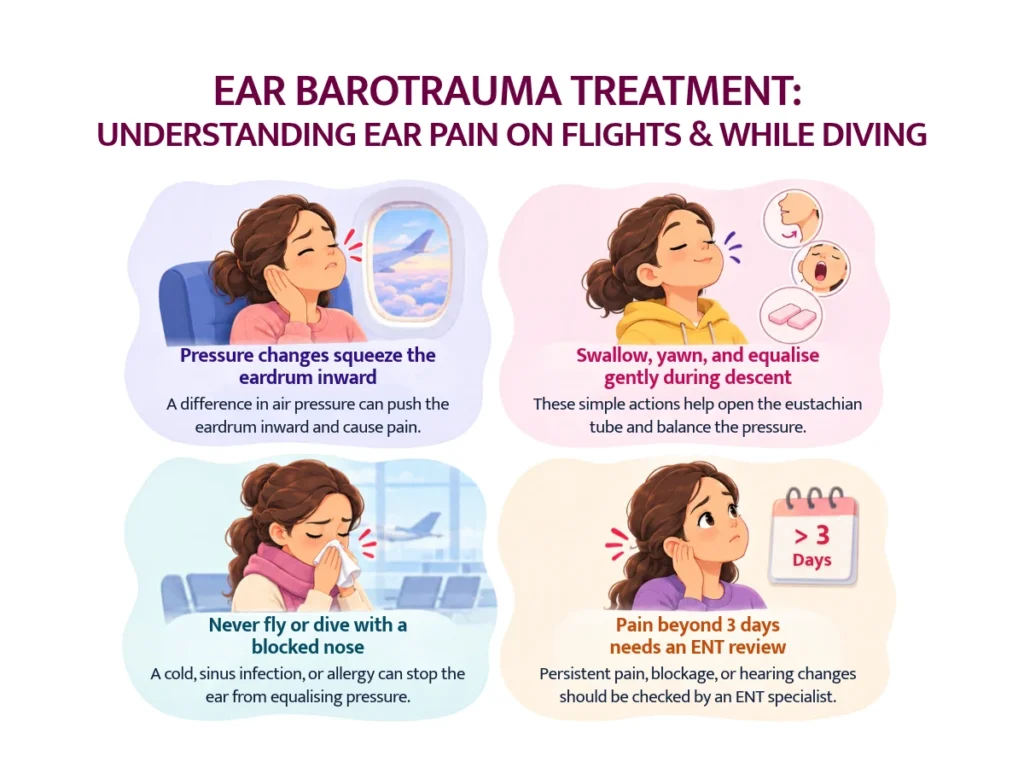
Ear barotrauma is ear injury from a pressure difference between the middle ear and outside air. It happens when the eustachian tube, which links the ear to the back of the nose, fails to open. The eardrum then stretches inward and causes pain.
Think of the eardrum as a drum skin stretched tight. It moves freely only when air pressure stays equal on both sides. During descent, outside pressure rises and the tube must open. A swollen tube often cannot, so the drum gets pushed inward. Divers face a faster change, because pressure rises within the first few metres of water.
High-Risk Situations: Flying With a Cold, Diving, Hill Travel, and Slap Injuries
Flying with a cold, hay fever, or sinus infection carries the highest risk. Children face extra risk because their eustachian tubes are short and narrow. Monsoon colds between June and September add to this.
Beginner divers and anyone diving with a blocked nose also face risk. In a study of 306 divers at one German ENT clinic, eustachian tube problems were the most common ear complaint. That study came from a single centre, so Indian figures may differ. A quick drive up ghat roads toward Ooty can also cause ear popping.
A hard slap, a cricket ball, or a bad water slide landing can tear the eardrum. Your next steps after such a blow appear in this guide on ruptured eardrum immediate care.
Prevention and Home Relief: Equalising Techniques and Ear Barotrauma Treatment
Postpone a flight if you have a heavy cold. If you must fly, see an ENT specialist 1 to 2 days before departure. During descent, stay awake and swallow, yawn, or chew sugar-free gum every few minutes. Then pinch your nose, close your mouth, and blow very gently for 3 to 5 seconds. Never blow hard.
Evidence for decongestants is mixed. One trial found no clear benefit from a nasal spray taken 30 minutes before descent. Ask your doctor before using any. Feed a baby during descent, and wake sleeping children before landing.
Divers should equalise every 1 to 2 metres during the first 10 metres of descent. Stop, rise 1 metre, and try again if pain starts. Never dive with a blocked nose.
Mild ear barotrauma treatment at home means rest, pain medicine as the label directs, and gentle equalising several times a day. Place a cotton ball coated with petroleum jelly at the outer ear opening before bathing. Do not put drops or cotton buds in the ear. Avoid flying or diving until the blockage clears.
Parents of children with implants often ask, can my child swim and play after an implant, and Dr. Shree Rao answers it in a separate guide.
Red Flags: Persistent Pain, Hearing Loss, or Discharge After a Pressure Event
Most mild cases improve within a few days. See an ENT specialist if pain or blockage lasts beyond 3 days. Seek care the same day for blood or fluid draining from the ear, sudden hearing loss, ringing, spinning dizziness, or a fever above 39°C (102°F). Divers with dizziness or hearing loss need urgent care, because inner ear injury and decompression illness look alike.
The ENT specialist examines the eardrum under a microscope and arranges audiometry, which is a hearing test. Many small tears heal alone, so the doctor often monitors first. Do not dive again until your doctor clears you.
Conclusion
Ear barotrauma happens when the eustachian tube cannot balance pressure during descent. Gentle equalising and travelling without a blocked nose protect your hearing. Timely ear barotrauma treatment also stops small injuries from becoming lasting problems. If pain after a flight or dive does not settle, you can book an appointment with Dr. Shree Rao for guidance on your next step.
FAQs
Can I fly after ear barotrauma?
Wait until the pain clears and your ENT specialist confirms the eardrum looks healthy. Flying too early can repeat the injury. Ask the doctor for a safe date.
Will health insurance cover my ear treatment?
Most health insurance plans cover ENT consultation and hearing tests when a doctor documents the medical need. Ask your insurer or TPA about cashless facility and pre-authorisation. Keep all bills for a reimbursement claim.
Which doctor should I see after diving?
See an ENT doctor who checks the eardrum under a microscope, such as the best ENT doctor in Hyderabad if you live near Telangana. Go the same day if hearing loss or dizziness appears.