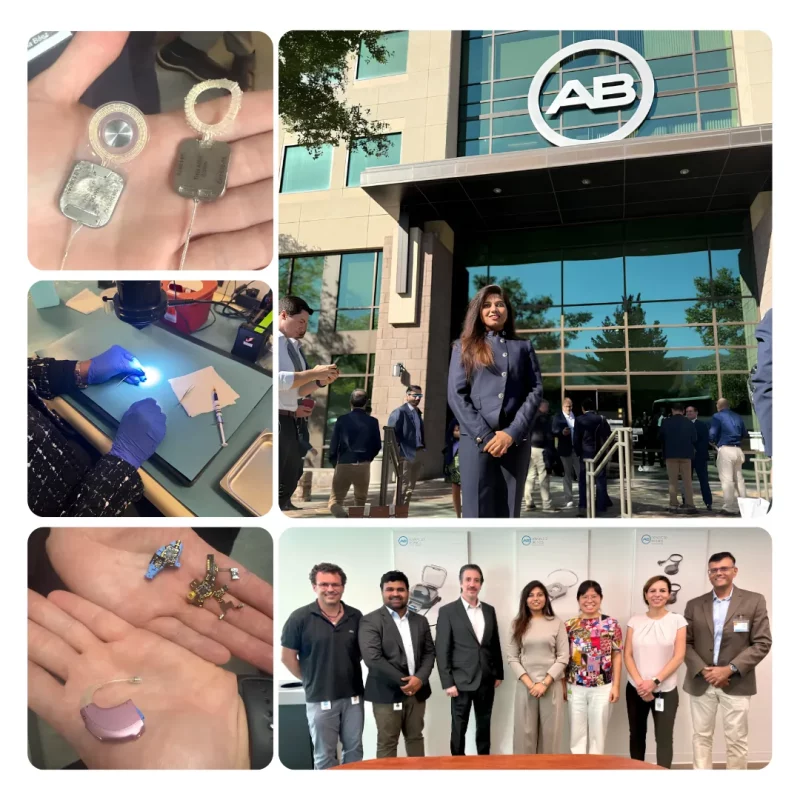
Visiting Advanced Bionics Global R&D Lab, California, gave me a new appreciation for what our patients actually receive inside their cochlea. These images show the receiver-stimulator package and magnet coil assembly from their latest implant, but what struck me most was understanding the precision required to bring these components together.
Inside climate-controlled clean rooms with air cycling 30 times per hour, the vast majority of assembly happens by hand under microscopes. When I say vast majority, I mean micrometers matter. The electrode array, the magnet placement, the lead attachments – each one influences how effectively the implant delivers sound information to the auditory nerve. This isn’t just manufacturing excellence; this is the foundation of our clinical outcomes.
As surgeons, we spend years perfecting surgical technique. But our results depend equally on what happens in the device engineering long before the patient reaches the OR. Seeing this level of precision at AB reinforced why their partnership in the BEEP Study and our collaboration on patient outcomes makes clinical sense. When the device is engineered to this standard, we have the foundation to deliver the best outcomes to our patients.
For anyone working in cochlear implants, I’d encourage you to look behind the processor, past the software updates, and understand the mechanical precision that makes the difference. It changes how you think about patient selection, surgical approach, and post-operative rehabilitation.